
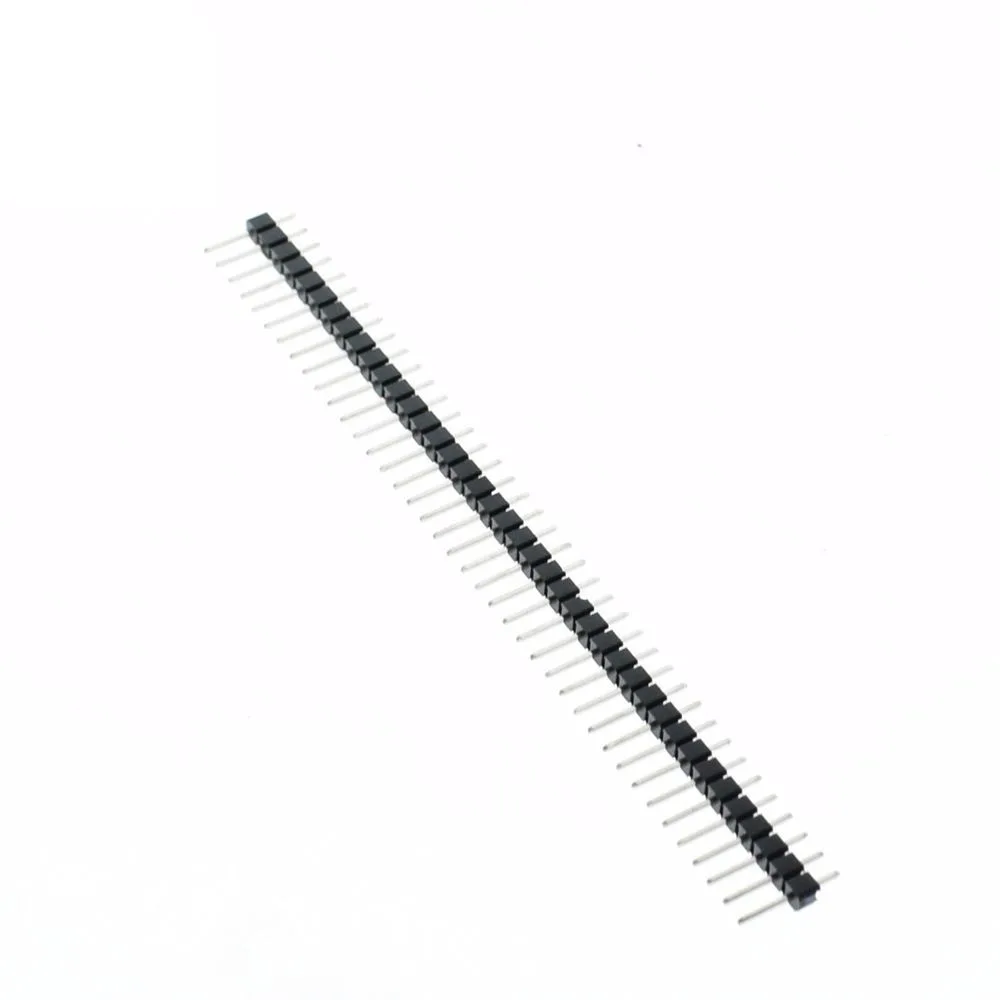
The 40-pin male single-row pin header is a foundational component in electronics. With 40 aligned metal pins spaced at the standard 2.54 mm pitch, it allows you to easily interface your microcontroller, sensor modules, and other hardware using female headers, jumpers, or directly to PCBs.
Key Features & Advantages
-
Standard 2.54 mm Pitch
Ideal for compatibility with prototyping boards, standard female connectors, and breadboards used in DIY electronics. -
40-Pin Strip
A full-length strip gives you versatility — you can break off smaller sections (e.g., 6-pin, 8-pin) as needed or use all 40 for extensive connections. -
Durable Through-Hole Design
Perfect for soldering to PCBs for stable, strong connections that won’t easily wobble or disconnect. -
Robust Contact Material
The pins are made of conductive metals (often copper alloy) to ensure good signal integrity, low resistance, and long-lasting performance. -
Secure Plastic Insulator
The black plastic base holds pins firmly in alignment and resists heat during soldering. -
Flexibility in Layout
Easily used for board-to-board, wire-to-board, or as a programming header interface.
Ideal Applications
-
Microcontroller breakout boards (Arduino, ESP32, etc.)
-
Breadboard-based prototyping and testing
-
Robotics and embedded systems
-
Custom shield / interface board designs
-
Signal routing and sensor module integration
-
Programming and debugging headers
-
IoT devices and control circuits
Technical Specifications
-
Number of Pins: 40
-
Row Type: Single row
-
Pitch: 2.54 mm (0.1″)
-
Mounting Style: Through-hole
-
Pin Length: Standard length for prototyping and board mounting
-
Pin Material: Conductive metal alloy (commonly copper-based)
-
Insulator Material: Durable plastic (heat resistant)
Why It’s a Must-Have
-
Provides a stable and reusable connection point for many modules and wires
-
Supports modular design — you can remove or resolder connections as your project evolves
-
Perfect for creating connectors in custom PCBs, especially where multiple signals are involved
-
A cost-effective way to keep your wiring organized, clean, and easy to change
Pro Tips for Use
-
Cut to Size with Care
If you only need a smaller segment, carefully cut the strip with wire cutters and clean up any burrs. -
Align Before Soldering
Secure the header in place while soldering to make sure pins remain straight. -
Use Quality Solder
Use rosin-core solder and a well-heated iron for solid joints without damaging the plastic insulator. -
Label Wires / Pins
If you’re using many pins, label or color-code the wires to avoid connection mistakes. -
Use Jumpers Wisely
Employ removable jumper wires for debugging or development before finalizing soldered connections.

Reviews
There are no reviews yet.