
Description
Description
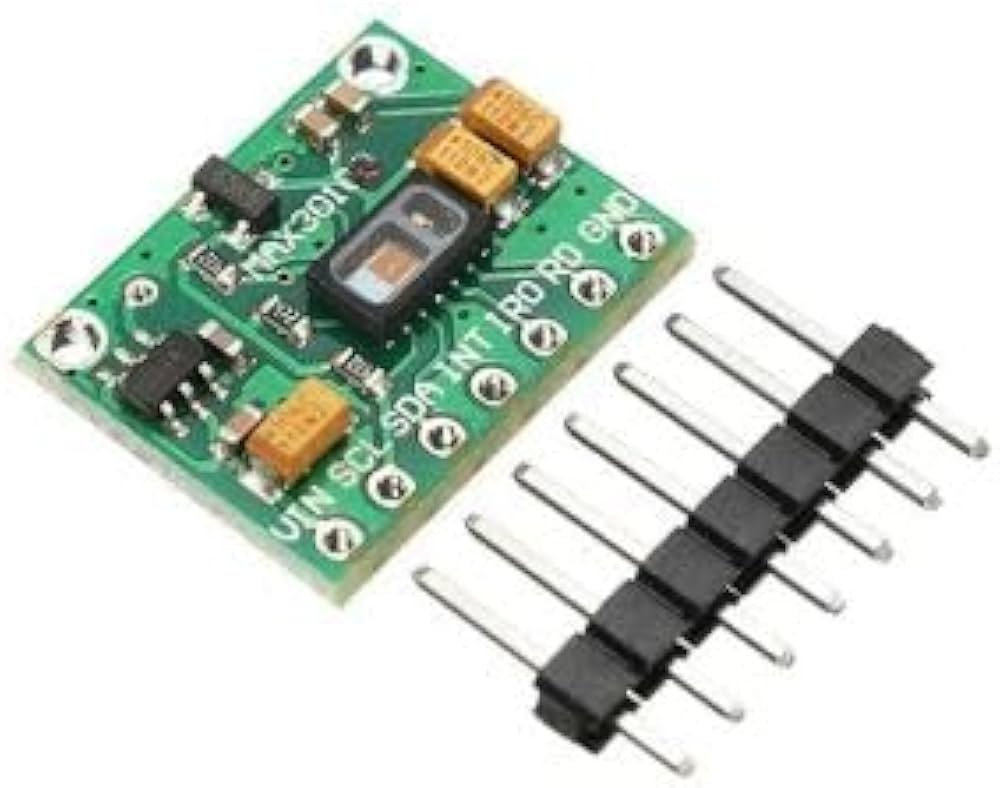
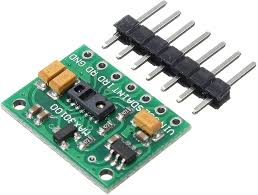
The MAX30102 Heart Rate and Pulse Oximeter Sensor Module is a high-performance integrated optical sensor designed for accurate measurement of heart rate (BPM) and blood oxygen saturation (SpO₂). An upgraded version of the earlier MAX30100, the MAX30102 features enhanced sensitivity, reduced power consumption, improved ambient light rejection, and better performance in low-signal conditions — making it ideal for wearable devices, IoT health systems, and advanced biomedical applications.
This compact module integrates a highly efficient red LED, infrared (IR) LED, and a photodetector capable of precise detection of subtle changes in blood volume. Its advanced digital signal processing engine ensures stable, noise-free readings, even in environments with fluctuating lighting or minor motion. With its industry-standard I²C interface, the MAX30102 connects easily to popular microcontroller platforms such as Arduino, ESP32, ESP8266, Raspberry Pi, STM32, and more.
How the MAX30102 Works
The MAX30102 uses photoplethysmography (PPG) — an optical sensing technique. When the LEDs illuminate the skin, the photodetector measures the varying absorption of light caused by pulsating blood flow. These variations are processed to determine:
-
Heart Rate (Beats Per Minute)
-
Blood Oxygen Saturation (SpO₂ Percentage)
With enhanced signal filtering, the MAX30102 provides a reliable reading even in challenging conditions.
Key Features
✔ Upgraded Accuracy & Stability
Improved optical sensing and advanced filtering ensure more stable readings than the MAX30100, especially in low-light and motion-affected environments.
✔ Dual LED System
-
Red LED: Used for SpO₂ measurement
-
Infrared LED: Used for heart rate measurement
These LEDs work together for simultaneous pulse and oxygen analysis.
✔ Ultra-Low Power Operation
Designed for battery-powered smart devices with:
-
Intelligent power saving
-
Adjustable LED drive current
-
Low-current standby mode
Perfect for wearable and portable monitoring equipment.
✔ I²C Communication Interface
Easily integrates with microcontrollers using only SCL and SDA, making prototyping simple and fast.
✔ Onboard ADC & Signal Processing
Includes:
-
Ambient light cancellation
-
High-resolution ADC
-
Integrated sample handling
-
Noise reduction filters
This reduces the need for complex external circuitry.
✔ Compact Sensor Module Design
The small PCB layout makes it suitable for embedded systems, smart wearables, and compact health monitoring devices.
Specifications
-
Model: MAX30102 Optical Heart Rate & SpO₂ Sensor
-
Interface: I²C (SDA/SCL)
-
Supply Voltage: 1.8V – 5V (with onboard regulator)
-
LEDs: High-performance Red + IR LEDs
-
Operating Current: Ultra-low power consumption
-
Sampling Rate: Configurable (with multiple modes)
-
Operating Principle: Photoplethysmography (PPG)
-
Built-In: Digital signal processing & ambient light rejection
-
Dimensions: Compact PCB module
Typical Applications
🌟 Wearable Devices
-
Smart watches
-
Fitness trackers
-
Health-monitoring wristbands
-
Sports analytics devices
🌟 Medical & Research Prototypes
-
Non-clinical pulse oximeters
-
Vital sign monitoring devices
-
Remote health monitoring systems
-
Biomedical research tools
🌟 DIY & Educational Projects
-
Arduino-based health monitoring systems
-
IoT wellness projects
-
Academic experiments
-
Prototype medical tech development
🌟 Smart Electronics & Automation
-
Sleep monitoring systems
-
Stress/heart-rate evaluation
-
Wellness kiosks and remote sensors
Advantages Over MAX30100
-
Higher accuracy and sensitivity
-
Improved rejection of ambient light interference
-
Better performance with motion
-
Lower noise and cleaner waveform output
-
More stable SpO₂ readings
-
Lower overall power consumption
Important Notes
-
The sensor must maintain steady finger contact for optimal performance.
-
Excessive movement or poor contact can affect reading stability.
-
For medical-grade usage, additional calibration and certified algorithms are required.

Reviews
There are no reviews yet.